3D Ultrasound: Why Does My Baby’s Nose Look Weird
December 16, 2023Updated April 23, 2026
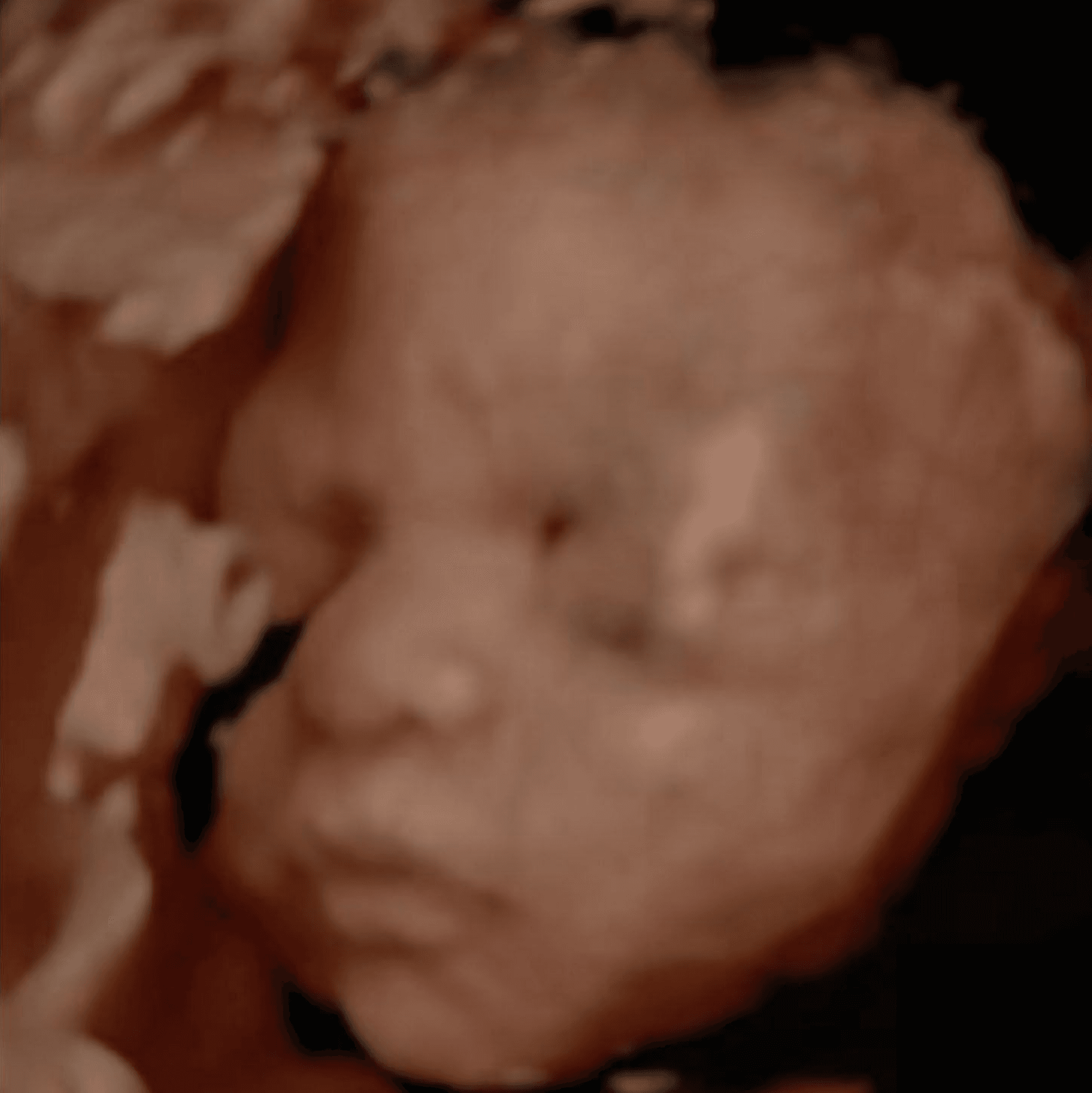
You look at your 3D ultrasound and your baby's nose seems… huge. Flat, wide, or just oddly shaped. It's one of the most common concerns parents bring up after a scan—and almost always, there's nothing to worry about. Here's what's actually going on.
Amniotic Pressure Squishes Soft Features
Your baby's nose is made of soft cartilage, and it's pressed against the amniotic sac and surrounding fluid. That gentle pressure can temporarily flatten or widen the nose in the image. After birth, the nose springs back to its natural shape—this effect is purely cosmetic and temporary.
Ultrasound Probes Distort Close-Up Features
Think of how a wide-angle camera lens makes objects near the center look larger. A 3D ultrasound probe works similarly—sound waves fan out from a narrow source, and features closest to the probe (like the nose) can appear wider than they really are.
Image Reconstruction Introduces Artifacts
A 3D ultrasound isn't a photograph. It's assembled from dozens of 2D slices stitched together by software. Small gaps or overlaps between slices can create artifacts—minor distortions in the surface rendering that often show up most visibly on the nose.
Timing Matters
If the scan was done too early, your baby's facial features may not have fully developed yet, making the nose appear broader or less defined. The optimal window for 3D ultrasound is 27–30 weeks, when facial features are well-formed but the baby still has room to move.

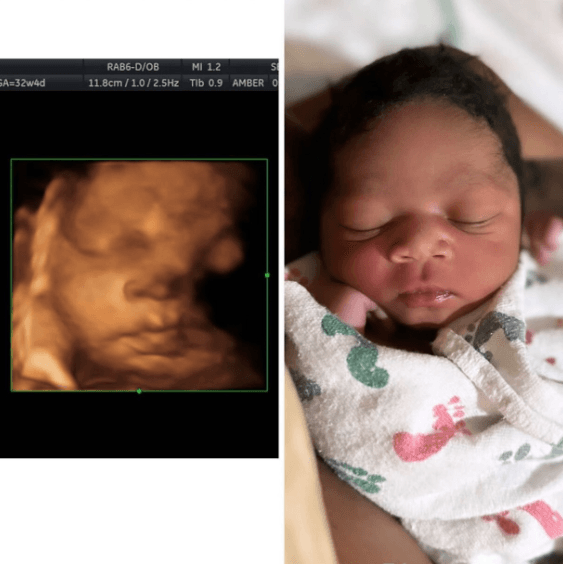
Bottom line: a wide-looking nose on a 3D ultrasound is almost always a product of physics and technology, not a sign of anything unusual. If you're concerned, your sonographer or doctor can walk you through exactly what the scan is showing.
See What Your Baby Really Looks Like
Upload your 3D ultrasound and get realistic baby photos in minutes.