3D Ultrasound Nose vs Real Baby: What to Actually Expect
February 4, 2026
Your baby's nose looks enormous on the 3D ultrasound. Wide, flat, maybe a little smooshed. You've googled "big nose 3D ultrasound" and now you're worried. Take a breath—this is one of the most common concerns in pregnancy forums, and the answer is almost always the same: your baby's nose will look completely different at birth.
Why Noses Look Bigger on 3D Ultrasound
There are several reasons the nose gets exaggerated on a 3D scan, and none of them have to do with your baby's actual nose size:
- Sound wave distortion. The ultrasound probe sends waves from a narrow point, creating a wide-angle lens effect. Features closest to the probe—usually the nose—appear proportionally larger.
- Amniotic pressure. Your baby's nose is soft cartilage pressed against the amniotic sac. The gentle pressure can temporarily flatten and widen it in the image.
- Image stitching artifacts. A 3D image is assembled from many 2D slices. Small misalignments between slices can make the nose appear wider or asymmetrical.
- Timing. Before 27 weeks, the nasal bridge hasn't fully developed, making the nose appear broader relative to the face. After 32 weeks, the baby is too cramped for a clear view.
For more detail on each of these factors, see our full article on why baby's nose looks weird on 3D ultrasound.
What Parents Actually Experience
The most common reaction after birth? "The nose looks nothing like the ultrasound." Pregnancy forums are full of parents sharing their 3D ultrasound next to their newborn photo, and the difference is striking. Wide, flat ultrasound noses turn into perfectly normal (often tiny) baby noses.
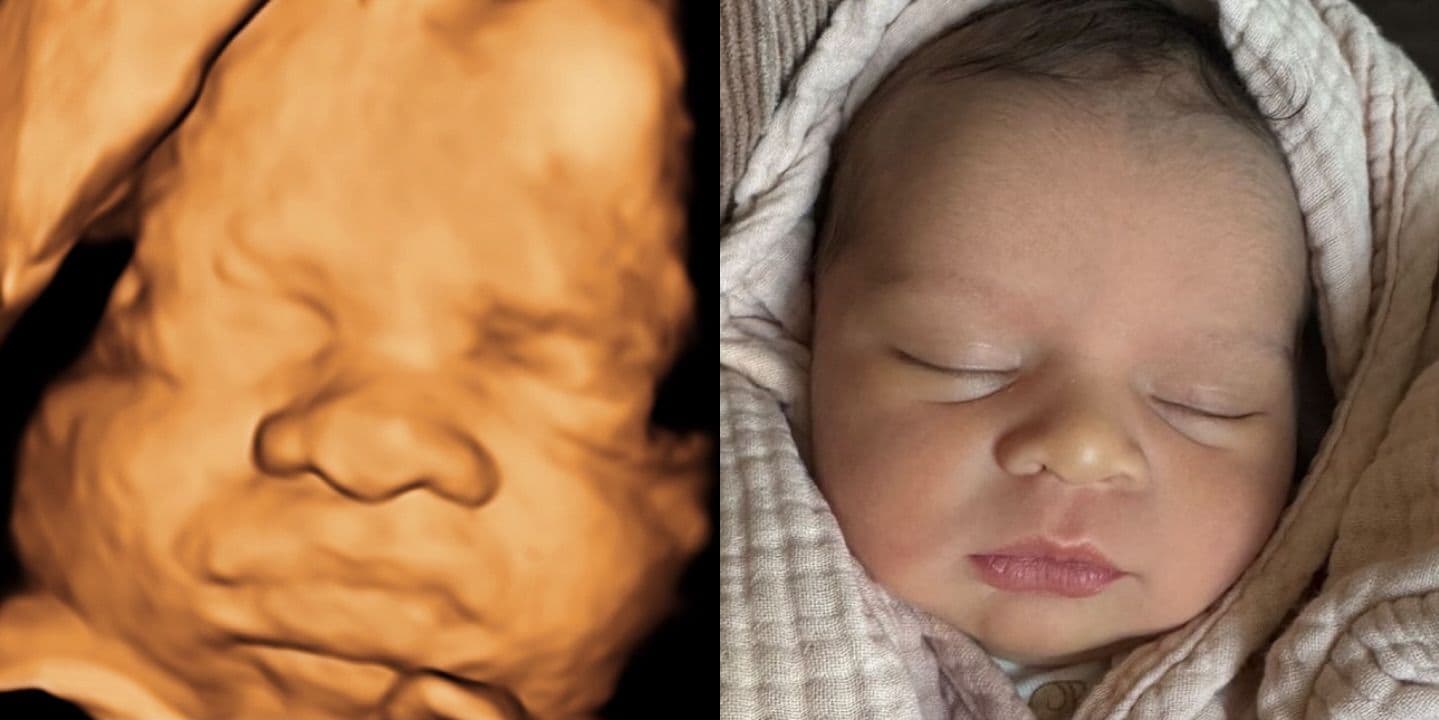
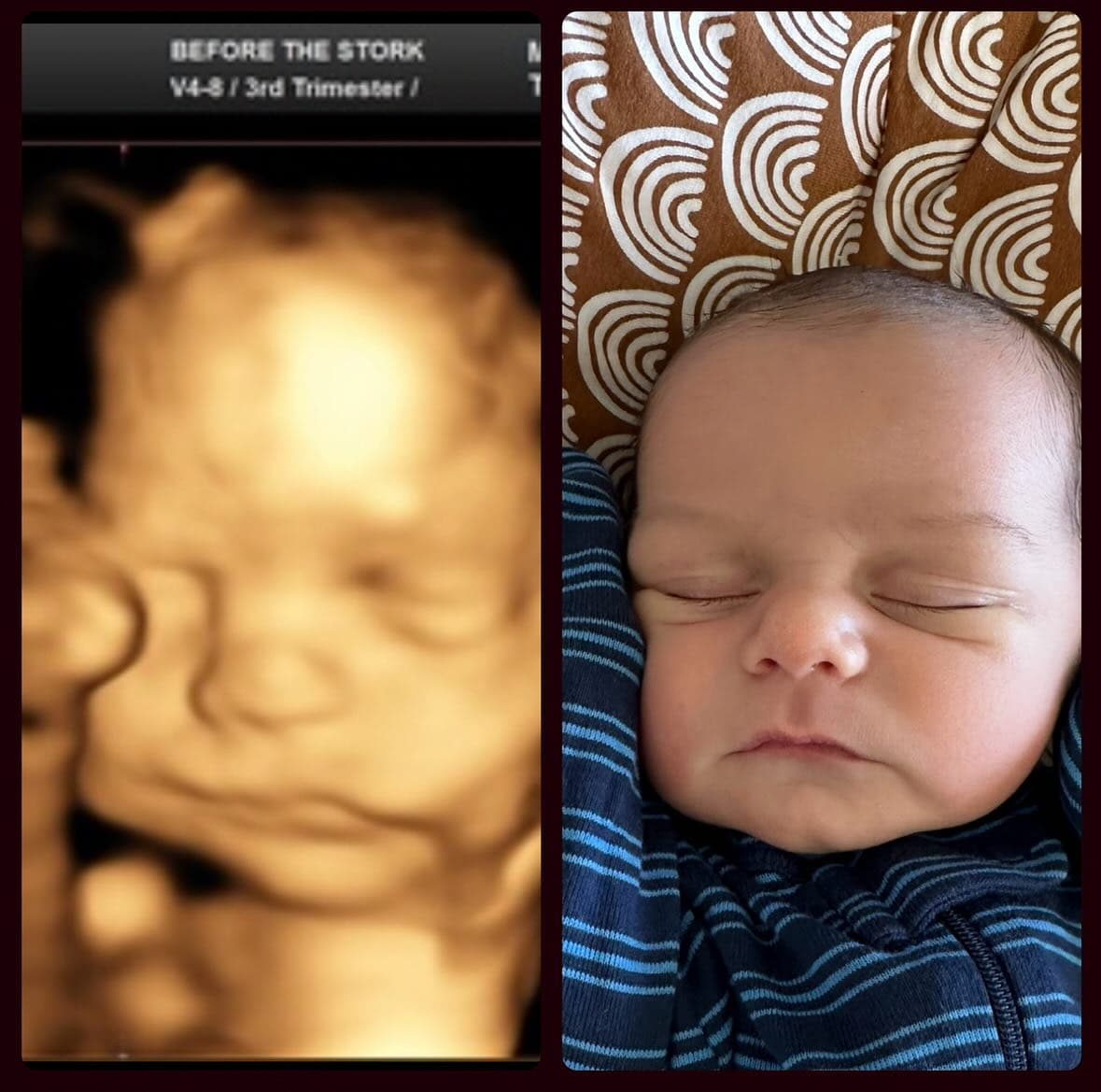
Ultrasound studios publish before-and-after galleries showing 3D scans alongside the born baby—and you can see the pattern clearly: the nose is almost always wider on the scan. Browse real examples at Fetal Vision Imaging, 3D Baby Boutique, and Baby Moments Ultrasound. Not every case is dramatic—some noses match closely—but the wide-nose effect is by far the most common outcome.
This makes sense when you understand what a 3D ultrasound actually is: a surface rendering built from sound waves, not a photograph. It captures general shape but distorts proportions, especially for protruding features like the nose.
When Should You Be Concerned?
In rare cases, an unusual nose appearance on ultrasound can indicate a medical condition—but your doctor will flag this during the clinical review, not the keepsake session. If your healthcare provider hasn't mentioned any concerns, the big-looking nose is almost certainly just a technology artifact.
The Takeaway
If your baby's nose looks wide or flat on the 3D ultrasound, you're in excellent company—nearly every parent has this experience. The 3D scan is great for seeing your baby's face shape and general features, but it's the wrong tool for judging nose size. Save your worrying for something that matters (like which car seat to buy) and enjoy the scan for what it is: your first look at the little person you're about to meet.
See What Your Baby Really Looks Like
Upload your 3D ultrasound and get realistic baby photos in minutes.